Educational content. This article does not replace consultation with a doctor or pelvic physiotherapist. For persistent symptoms or pre-existing conditions, seek professional guidance before starting any exercise routine.
You sleep badly three or four nights in a row and notice your body responds differently. Desire shows up less often, erections take longer to come and are harder to keep. The morning erection that used to arrive on its own disappears for a few days. It is easy to blame tiredness and move on, but what is happening has a name: sleep is when your body makes a large part of its testosterone, and also when it exercises erections without you noticing.
This article explains the link between sleep, testosterone and firmness, what a short night takes away from performance, what you can adjust in your routine, and where pelvic floor training comes in, the part of firmness that depends on muscle and that Ritmo guides in a few minutes a day.
Sleep and erections, the short answer
Short answer
Poor sleep hurts erections in two ways. The first is hormonal: testosterone production follows sleep and rises through the night, so short nights leave the hormone lower the next day and libido drops. The second is vascular: during REM sleep the penis has spontaneous erections that bring oxygen to the tissue. Bad sleep cuts both. Sleeping well and training the pelvic floor work on different parts of the problem.
How to train this in practice
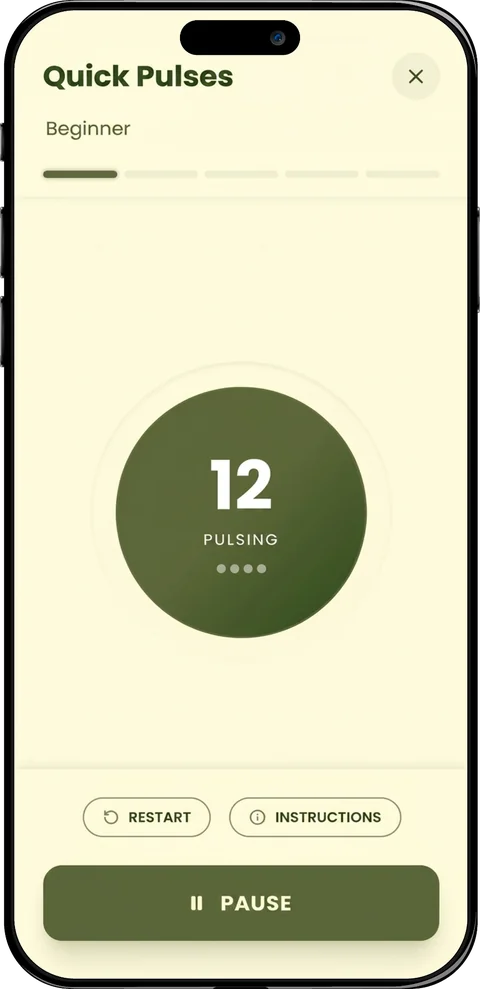
Sleep takes care of the hormone; the muscles that hold an erection need training. Ritmo, a guided training app for iPhone and Android, shows on screen when to contract, hold and release, vibrates at every phase change and builds a 5 to 10 minute daily plan from a short questionnaire. It is on the App Store and Google Play.
What sleep does to testosterone
Testosterone is not produced at a steady rate. It follows a daily cycle: it rises during the night, peaks when you wake up and drifts down through the day. That morning peak depends on actually sleeping, not just lying in bed. Sleep itself, with its full cycles, drives the release.
When the night is cut short, the body loses part of that production window. One bad night on its own does not change much. The problem is the streak: weeks of five hour nights because of work, a phone in bed or a small child keep the hormone lower all the time. Men feel it as less desire, less energy to work out and a slower sexual response.
The peak comes late in the night
Testosterone rises while you sleep and reaches its highest point close to waking. If you regularly cut your sleep at the end by getting up too early, you lose exactly the part of the night when production is highest.
Sleep and cortisol pull in opposite directions
Short sleep also keeps cortisol, the stress hormone, higher than it should be. High cortisol and testosterone move in opposite directions: when one stays up for a long time, the other gets squeezed. That is why a bad night and a tense day tend to show up together in performance. If that sounds like you, read about stress, cortisol and sexual performance .
The morning erection is a signal, and sleep produces it
Every healthy man has several erections during the night, with no erotic dream and no stimulation. They happen during REM sleep, which repeats in cycles through the night. The erection you wake up with is often the last of them.
These nighttime erections have a job: they bring oxygen rich blood to the corpora cavernosa and keep the tissue elastic. Think of it as automatic maintenance. If you sleep little or wake up several times, you spend less time in REM and lose part of that maintenance.
That makes the morning erection a good gauge. When it disappears for a few days after bad nights and comes back when sleep does, the vascular side is probably fine and what was missing was rest. When it stays gone for weeks even though you sleep well, it is time to see a urologist.
What to do to sleep better
None of this is new, and almost all of it depends on doing it every day:
- A fixed wake up time. Weekends included. Your internal clock sets itself by when you wake up more than by when you go to bed.
- Bright light in the morning, little light at night. A bright screen close to bedtime pushes sleep later.
- Keep alcohol away from bedtime. It helps you fall asleep but breaks up the second half of the night, where most REM sleep happens. More on this in alcohol and erections .
- Caffeine only until early afternoon. The effect lasts longer than it seems.
- Loud snoring and tiredness that never goes away. These can point to sleep apnea, which wrecks sleep quality and has a known link with erectile dysfunction. That calls for a medical assessment.
Where the pelvic floor fits into firmness
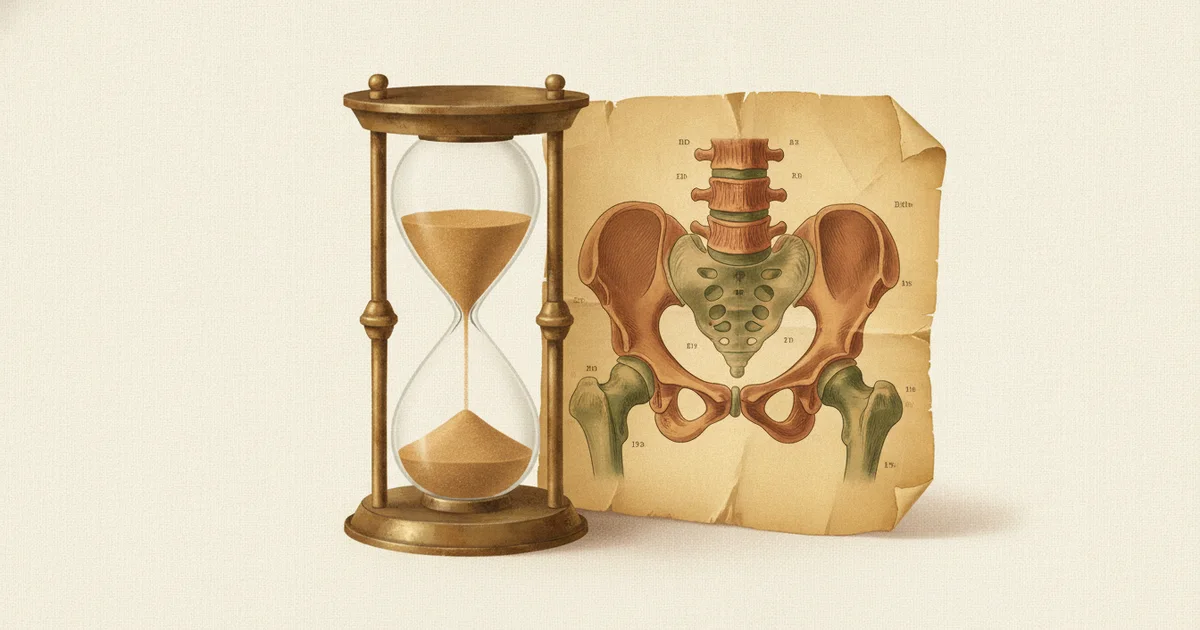
Good sleep takes care of the hormonal side and the nightly maintenance. But erections also depend on muscle. The ischiocavernosus and the bulbocavernosus, two pelvic floor muscles, wrap around the base of the penis. When they contract, they slow blood from leaving and help keep pressure inside the corpora cavernosa. That is what helps an erection hold once it arrives.
These muscles are voluntary and respond to training like any other. With daily practice, men start to feel the muscle respond, contract harder and hold longer. In practice that shows up as firmer erections and more control in the moment. To understand the muscle from scratch, see what the male pelvic floor is .
Sleep and training add up
Sleeping well gives your body hormone and tissue in good shape. Training the pelvic floor gives it the muscle that keeps blood in place. One does not replace the other, and taking care of both gets you more from each.
One caution: do not train exhausted
After a very bad night, the muscle tires faster and technique slips. Glutes and abs start helping and the training loses quality. On a day like that, do the session calmly and respect the rest between exercises instead of forcing extra reps. Too much volume gets in the way, as explained in how many Kegel reps per day .
How Ritmo puts this into practice
Ritmo does not track your sleep. What it does is take care of the part of firmness that depends on muscle, with training that fits even on a day you slept badly.
- Guided training, visual and by vibration. During each exercise the screen shows a timer and the phase (contract, hold, release, rest) and the phone vibrates at every change. You follow the rhythm without counting in your head, which helps when your focus is low.
- 5 to 10 minute sessions. Each session has 4 to 7 exercises with a rest screen between them.
- Session A and Session B. A trains strength and endurance, B trains control and coordination. Both carry the same weight in the program.
- Questionnaire based plan and automatic progression. The plan is built from your answers and the load goes up on its own as you progress.
- Weekly Strength Test. Once a week you measure your own strength and follow your progress.
- Short lessons and a discreet icon. Quick explanations about the muscle, and an app that does not announce what it is on your home screen.
Frequently asked questions
Can lack of sleep cause erectile dysfunction?
It can contribute. Short nights in a row lower testosterone, keep cortisol high and cut the time spent in REM sleep, which is when the nighttime erections that oxygenate penile tissue happen. Men feel it as less desire and less firmness. If the problem continues even when you sleep well, see a urologist.
Why did my morning erection disappear?
The morning erection is usually the last of the erections that happen during REM sleep. When it disappears for a few days after bad nights, alcohol in the evening or stress, and returns when sleep improves, rest was usually what was missing. When it stays gone for weeks despite good sleep, it is worth a medical assessment.
How many hours of sleep do you need for testosterone?
Most adults need seven to nine hours a night. For testosterone, what matters most is not cutting the end of the night short, because the hormone rises while you sleep and peaks close to waking. Getting up at the same time every day helps your body keep that cycle.
Does sleep apnea affect erections?
Sleep apnea breaks up sleep and lowers oxygen levels during the night, and it has a known link with erectile dysfunction. Loud snoring, breathing pauses noticed by whoever sleeps next to you and daytime tiredness that never goes away are signs to see a doctor, who may order a sleep study.
Can pelvic floor training make up for a bad night of sleep?
It does not make up for the hormonal side, but it takes care of another part of firmness. The pelvic floor muscles wrap around the base of the penis and help keep blood in the corpora cavernosa. Sleep and training add up: sleep takes care of the hormone, training takes care of the muscle that holds the erection.
Is there an app to train erection firmness?
Yes. Ritmo is a guided male pelvic floor training app for iPhone and Android. It builds your plan from a questionnaire, guides each 5 to 10 minute session by showing on screen when to contract, hold and release, with a vibration at every phase change, and tracks your progress. It is on the App Store and Google Play. It does not replace medical care.
Conclusion
Sleep is when your body makes a large part of its testosterone and when it maintains penile tissue through nighttime erections. Short nights in a row take away both, and men feel it as less desire and less firmness. Waking up at the same time, putting the screen down and drinking less at night usually helps more than any supplement.
The other half of firmness is muscle, and muscle can be trained. Ritmo guides that training in 5 to 10 minutes a day, wherever you want, with the screen and vibration telling you when to contract and when to release.