Educational content. This article does not replace consultation with a doctor or pelvic physiotherapist. For persistent symptoms or pre-existing conditions, seek professional guidance before starting any exercise routine.
You are 25, maybe 30, no known health problems, and suddenly your erection doesn't show up the way it used to. Or it shows up and fades halfway through. The first time, you blame being tired. The second time, doubt creeps in, and by the third your head is doing the math before your clothes come off. It feels like this shouldn't happen to someone your age.
It does, and it is more common at this age than men admit to each other. At this stage, the cause is usually something you can change. This article explains what knocks down a young man's erection, how to tell what is mind from what is body, when to see a urologist, and what you can start training today, including with Ritmo.
Short answer: why young men get erectile dysfunction
Short answer
In young men, erectile dysfunction usually comes from several factors stacking up: performance anxiety, stress, poor sleep, alcohol, smoking, a sedentary life and, sometimes, a medication side effect. It is rarely a serious disease, but it is worth seeing a urologist to rule out a physical cause. What helps most is fixing habits, breaking the anxiety cycle and training the pelvic floor, the muscle group that keeps blood inside the penis during an erection.
How to train this in practice
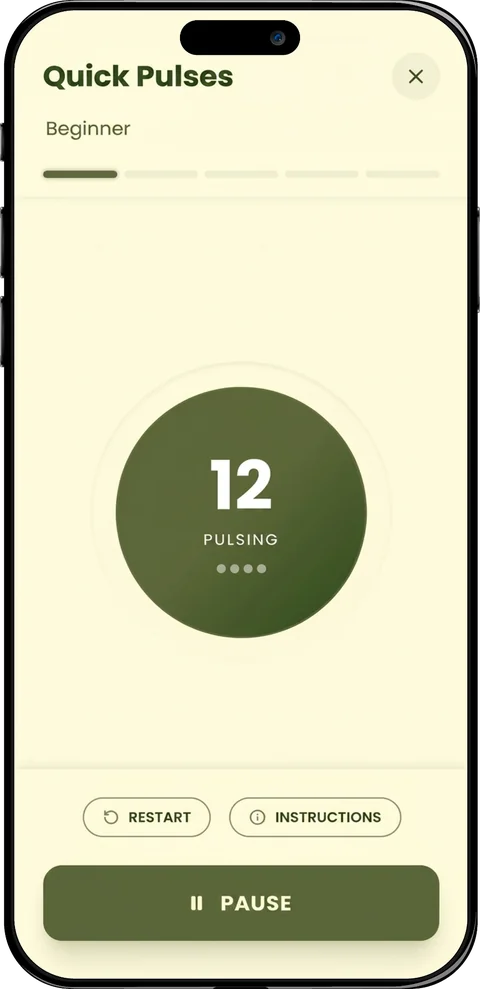
Of everything that affects your erection, the pelvic floor is the part you can train directly. Ritmo, a guided training app for iPhone and Android, shows on screen when to contract, hold and release, vibrates at every phase change and builds a 5 to 10 minute daily plan from a short questionnaire. It is on the App Store and Google Play.
How an erection works (and where it fails)
An erection starts in the brain. A trigger, whether touch, an image or a thought, makes the nervous system release substances that relax the arteries of the penis. Blood flows into the corpora cavernosa, they fill up and press on the veins that would carry that blood back out. That is when the pelvic floor does its job: the ischiocavernosus and the bulbocavernosus, two muscles at the base of the penis, contract and help keep the pressure inside.
So: nerve signal, blood and muscle. When any of them fails, the erection is weak or doesn't last. In older men, the problem is usually in the blood vessels. In young men, it is almost always in the signal or the muscle, and both respond well to change.
The most common causes in young men
Performance anxiety
This is the number one cause at this age. Fear of failing switches on the sympathetic nervous system, the fight or flight response, which tightens blood vessels and sends blood to the big muscles instead of the penis. One failure becomes a memory, the memory becomes fear of next time, and the fear causes the next failure. The full cycle is covered in how to not lose your erection from nerves.
Stress and poor sleep
Heavy workloads, short nights and a crowded head lower testosterone and keep the body on alert all day. Erections depend on the nervous system's rest mode, and someone who lives on alert has trouble switching into it. Short sleep also takes away morning erections, which are a good gauge of erectile health. The link between sleep and firmness is in sleep, testosterone and erections.
Alcohol, smoking and other substances
Alcohol depresses the nervous system and gets in the way of the signal that starts an erection. Smoking narrows blood vessels and reduces blood flow over time. Other recreational drugs also interfere with the nerve signal. If the problem always shows up after drinking, the article on alcohol and erections helps you find the limit.
Inactivity and weight
Sitting all day and gaining belly fat hurt circulation and testosterone production. A body that doesn't move has stiffer blood vessels and less responsive muscles, the pelvic floor included.
Medications and health conditions
Some antidepressants, anxiety medications, hair loss medications and blood pressure drugs can affect erections. So can diabetes, hormonal changes and thyroid problems, even in young people. Never stop a medication on your own: take the question to the doctor who prescribed it.
It is rarely one cause
In practice, what you see in young men is a pile up: a stressful week, short sleep, a few beers and a little fear left over from last time. Each factor alone might not knock the erection down. Together, they do. That is why working on several things at once beats hunting for a single culprit.
Is it psychological or physical? A simple way to start sorting it out
One question helps a lot: does your erection fail in every situation or only in some? If you wake up with erections, can get firm on your own, and the problem shows up only with a partner, or only with someone new, the emotional side is carrying a lot of weight. If your erection is weak in every situation, including in the morning, the physical side deserves a closer look.
Use this as a starting point for the talk with your urologist, not as a diagnosis. And the line is never clean: a physical problem creates anxiety, and anxiety makes any physical problem worse. In most cases both sides are present.
Can psychological erectile dysfunction be cured?
Yes, and it usually responds well. When anxiety is the main cause, breaking the cycle solves it: take the pressure off the moment, talk with your partner, treat the anxiety with a professional when it is bigger than sex, and rebuild confidence that your body responds. Pelvic floor training helps with that last part, because it gives a man physical proof, felt every day, that the muscle is getting stronger.
When to see a urologist
If the problem keeps happening for more than a few weeks, see a urologist. At a young age, the visit is about ruling out physical causes, such as hormonal changes, diabetes or medication effects, and putting a plan together. Go sooner if there is pain, a new curve in the penis, blood in semen or urine, or a big drop in desire.
Your doctor may prescribe tadalafil for a while, along with habit changes and pelvic floor exercise. The medication helps blood get in; training helps the muscle hold it there. One doesn't replace the other, and how they add up is covered in tadalafil and Kegels together.
What you can do starting today
- Sleep better. A fixed bedtime and your phone away from the bed already change a lot.
- Move your body. Walking, lifting or any cardio improves circulation and testosterone.
- Cut back on alcohol and quit smoking. They are the two habits that weigh most on blood flow.
- Take the pressure off. Sex is not a test. Lowering the stakes takes fuel away from anxiety.
- Train your pelvic floor. It is the muscle that holds the erection, and it responds to training like any other.
Pelvic floor training has one advantage over the other items: you feel the result. The squeeze gets stronger, you hold it longer, you notice the muscle answer when you call it. For someone who lost trust in his own body, that feeling counts for a lot. The step by step technique is in the erectile dysfunction exercise guide.
How Ritmo puts this into practice
Ritmo is a guided male pelvic floor training app for iPhone and Android. You answer a questionnaire about your goal and starting point, and the app builds the plan. Each session lasts 5 to 10 minutes and has 4 to 7 exercises, with a rest screen between them. During each exercise, the screen shows the timer and the phase, contract, hold, release or rest, and your phone vibrates at every change. You don't have to count anything.
The program alternates two sessions of equal weight: Session A trains strength and endurance, which is what holds the erection; Session B trains control and coordination. Progression is automatic, and the weekly Strength Test shows whether the muscle is responding more. Short lessons explain the why behind each step. The icon is discreet, and you can do a session anywhere you like, with no equipment.
Frequently asked questions
Is it normal to have erectile dysfunction in your 20s or 30s?
An occasional failure is normal at any age, especially with fatigue, alcohol or nerves. When the problem keeps happening for a few weeks, it is worth seeing a urologist. In young men the cause is usually a mix of anxiety, stress, poor sleep and habits, and it almost always has a solution.
Can psychological erectile dysfunction be cured?
Yes, and it usually responds well. Breaking the performance anxiety cycle, taking the pressure off the moment, treating anxiety with a professional when it is significant and training the pelvic floor to trust your body again are what help the most.
How can I tell if erectile dysfunction is psychological or physical?
A starting point: if you wake up with erections and can get firm on your own, but fail with a partner, the emotional side carries a lot of weight. If your erection is weak in every situation, including in the morning, the physical side deserves a closer look. A urologist makes the diagnosis.
When should I see a urologist for erectile dysfunction?
When the problem keeps happening for more than a few weeks. Go sooner if there is pain, a new curve in the penis, blood in semen or urine, or a big drop in desire. The visit rules out physical causes such as hormonal changes, diabetes or medication effects.
Do pelvic floor exercises help erectile dysfunction in young men?
They help. The ischiocavernosus and bulbocavernosus, pelvic floor muscles, contract during an erection and help keep blood inside the penis. Trained, they hold the erection better, and you feel the muscle respond, which also helps rebuild confidence.
Is there an app for treating erectile dysfunction with exercises?
Yes. Ritmo is a guided male pelvic floor training app for iPhone and Android. It builds the plan from a questionnaire, guides each 5 to 10 minute session by showing when to contract, hold and release, vibrates at every phase change and tracks your progress. It is on the App Store and Google Play. It does not replace medical care.
Conclusion
Erectile dysfunction in a young man is scary, but it almost always has causes you can change: anxiety, stress, sleep, alcohol, smoking, inactivity. See a urologist to rule out anything physical, adjust the habits that are weighing on you, and don't let one bad night become the script for the next ones.
In the meantime, train the muscle that holds the erection. Ritmo guides every 5 to 10 minute daily session, shows when to contract and release, and tracks your progress, so you can feel your body respond again.