Educational content. This article does not replace consultation with a doctor or pelvic physiotherapist. For persistent symptoms or pre-existing conditions, seek professional guidance before starting any exercise routine.
You learned Kegels lying down, eyes closed, paying attention to every contraction. Lying down, it works: you feel the muscle lift, you hold, you release. Then you get out of bed and the feeling is gone. Standing in line, sitting in the car or at your desk, you are not sure you are squeezing the right thing, and the training seems to have stayed in the bedroom.
This article explains why Kegels get harder or easier depending on your position, how to move from lying down to sitting and then standing without losing technique, and how to fit the training into your day. It also shows how Ritmo guides each session so you can train wherever you want.
Standing and sitting Kegels, the short answer
Short answer
You can do Kegels standing and sitting, and it is worth it. Lying down is the easiest position because the pelvic floor is not holding up the weight of your organs. Sitting, the muscle works a little harder, and standing it has to contract against gravity, which is how it works in daily life and during sex. The path is to learn lying down, move to sitting once your technique is solid, and then train standing.
How to train this in practice
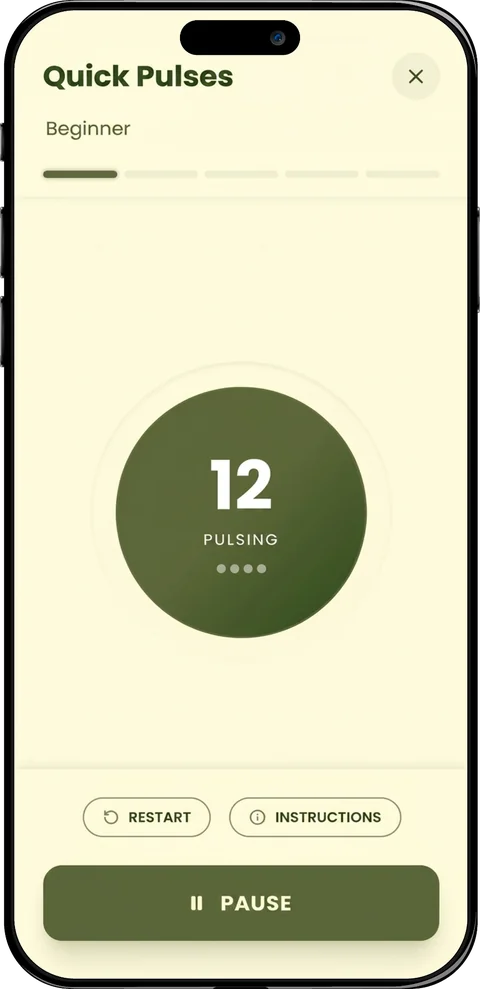
In any position, what makes the training pay off is contracting, holding and releasing at the right time. Ritmo, a guided training app for iPhone and Android, shows on screen when to contract, hold and release, vibrates at every phase change and builds a 5 to 10 minute daily plan from a quick questionnaire. It is on the App Store and Google Play.
Why position changes the exercise
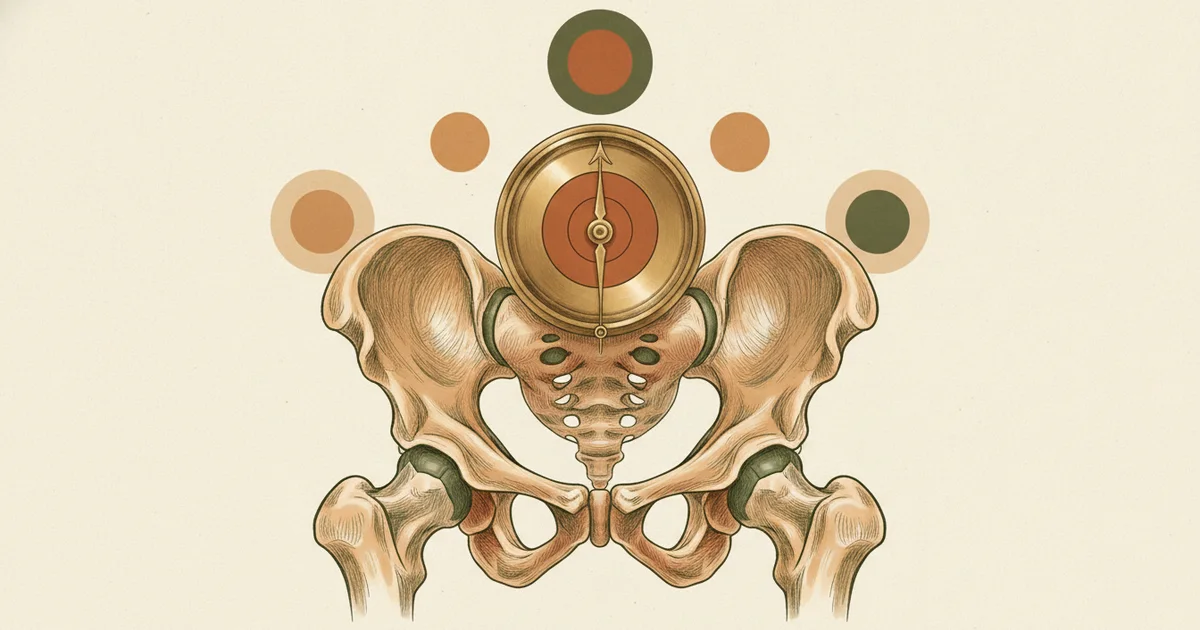
The pelvic floor is a group of muscles that closes the bottom of the pelvis, like a hammock stretched between the pubic bone in front and the tailbone in back. It holds the bladder and bowel in place, controls the flow of urine and takes part in erection and ejaculation.
Lying on your back, that hammock carries almost no load. The muscle contracts freely, which is why the movement is easier to feel. Sitting, the weight of your upper body starts pressing on the area and the pelvic floor has to work a bit more. Standing, your organs sit directly on top of it, and the contraction happens against gravity.
In real life you spend almost the whole day sitting or standing. Erections, most sex and ejaculatory control happen with your body out of the lying position. A muscle that only learned to contract lying down comes up short exactly where it is asked to do the most.
Gravity is the load
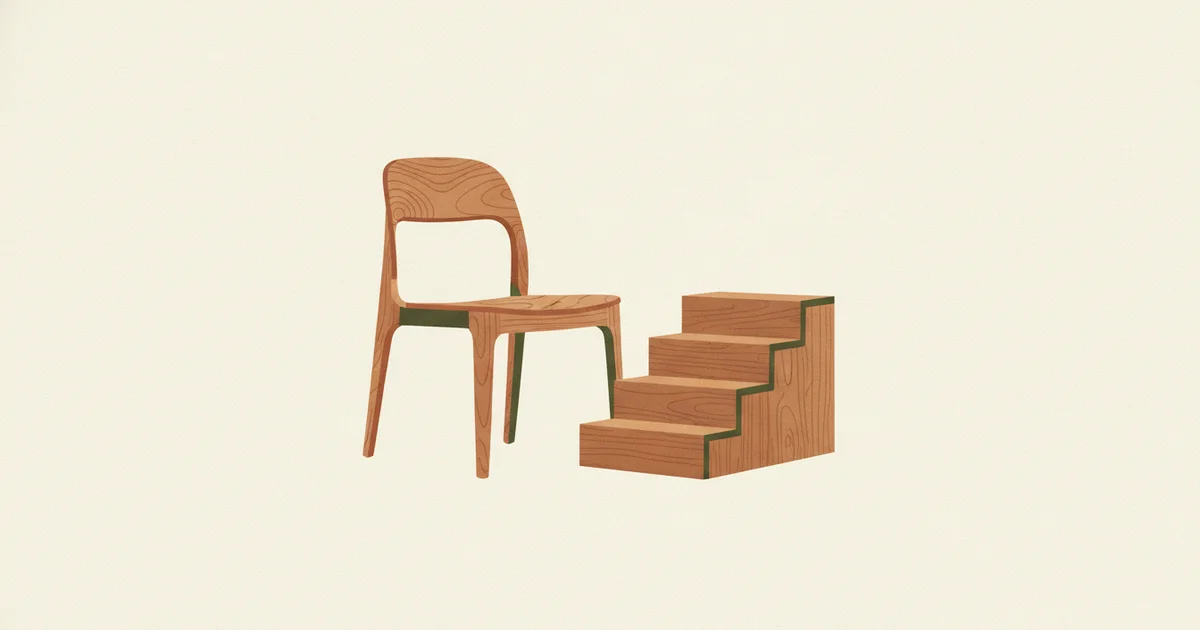
Pelvic floor training has no weight plates. The load is your own body weight on the muscle. Going from lying down to sitting, and from sitting to standing, is the simplest way to make the same exercise more demanding.
The progression: lying down, sitting, standing
1. Lying down: learn the movement
Start on your back, knees bent, feet flat. Contract the muscle you would use to stop the flow of urine: the base of the penis draws slightly into the body. Glutes, thighs and abs stay relaxed. If you are still unsure whether you are hitting the right muscle, the guide on how to know you are contracting the right muscle has the tests. Stay here until you can contract and release without help from any other muscle.
2. Sitting: train without full attention
Sit on a firm chair, both feet on the floor, weight on your sit bones, without slumping your lower back. Do the same movement. Sitting, the chair gives you useful feedback: when you contract, you feel the area between the anus and the scrotum lift slightly away from the seat. When you release, it comes back down.
This is the easiest position to fit into your routine, because nobody can tell. You can train in a parked car, at your desk or in a waiting room.
3. Standing: train the way your body is used
Stand with feet hip width apart, knees soft, weight spread across both feet. The contraction is the same, but now the muscle works against your full body weight, and your glutes will want to help. Keep your hips still and your glutes loose. If your body leans forward or your glutes clench, go back to sitting for a while longer.
Sign you are ready to move up
You can contract, hold and release in your current position without holding your breath, without squeezing your glutes and without losing strength in the last reps. When that feels easy, move up a position.
Mistakes that show up once you get off the floor
- Squeezing the glutes. Standing, this is the most common mistake. The glutes clench, the hips move and the pelvic floor barely works. The right contraction is small and invisible from the outside.
- Holding your breath. When holding a contraction, many men lock their breathing. That pushes abdominal pressure down, against the muscle you are trying to lift. Breathe normally through the whole exercise. More on this in breathing and the pelvic floor .
- Forgetting to release. When you train during the day, it is easy to contract and leave the muscle half on. Full relaxation between contractions is part of the exercise. A pelvic floor that never lets go stays tense, and that hurts control.
- Overdoing it because nobody sees. Since it is invisible, it is tempting to squeeze all day. A tired muscle loses technique. The right volume beats high volume, as the article on how many Kegel reps a day explains.
How to bring the training into your day
It helps to separate training from use.
Training is the session: a short, organized block with strength, endurance and control contractions, rest between them and a load that goes up over time. That is where the muscle gets stronger. You can do it sitting or standing, wherever you have a few quiet minutes.
Use is calling on the muscle outside the session, in the situations where it will be needed. A few ideas:
- Before lifting something or coughing. A light pelvic floor contraction before the effort teaches the muscle to brace on its own.
- After urinating. A few contractions while standing help empty the urethra and prevent the drip after you zip up. Just do not stop the stream midway as a way of training.
- Routine triggers. A red light, a meeting starting, the coffee being ready. Tying a short set to something that happens every day makes the habit easier to keep.
What changes when the muscle responds standing up
When your pelvic floor knows how to contract against gravity, you start feeling it in the situations where it matters. During sex, that shows up as more control over arousal, because you can notice and hold the muscle without stopping everything. For firmness, the muscles around the base of the penis help keep blood inside, and a muscle trained in the position you are actually in does that job better. To understand these muscles in more detail, see what the male pelvic floor is .
Outside of sex, the gain is simpler: less dribbling after urinating and a firmer base when you strain. And with that comes confidence, because you know where the muscle is and can use it whenever you want.
How Ritmo puts this into practice
Ritmo does not require you to lie down. The session runs on your phone, and you choose where and in what position to do it.
- Guided training, visual and haptic. During each exercise the screen shows the timer and the phase (contract, hold, release, rest) and the phone vibrates at every change. With the phone in your pocket or on the desk, the vibration keeps time without you having to look or count.
- 5 to 10 minute sessions. Each session has 4 to 7 exercises with a rest screen between them, which fits into a break in your day.
- Session A and Session B. A trains strength and endurance, B trains control and coordination. Both carry the same weight in the program.
- Plan from a questionnaire and automatic progression. The plan is built from your answers and the load goes up on its own as you progress.
- Weekly Strength Test. Once a week you measure your own strength and track your progress.
- Short lessons and a discreet icon. Quick explanations about the muscle, and an app that does not announce what it is on your phone's home screen.
Frequently asked questions
Can you do Kegels standing up?
Yes, and it is one of the most useful ways to train. Standing, the pelvic floor contracts against the weight of your organs and upper body, which is how it works in daily life and during sex. Ideally you get to standing after mastering the movement lying down and sitting, without squeezing your glutes or holding your breath.
What is the best position for Kegels?
To learn, lying down, because the muscle carries no load and the contraction is easier to feel. To progress, sitting and then standing, because gravity becomes the load and the training gets closer to how the muscle is really used. There is no single position: the path is to move through them as your technique improves.
Can I do Kegels sitting at work?
Yes. Sitting is the most discreet position: feet on the floor, weight on your sit bones and the same contract, hold and release movement. Nobody can tell. Just make sure you fully release the muscle between contractions and do not turn the whole day into training, because a tired muscle loses technique.
Why can't I feel the muscle when I do Kegels standing?
Standing, the glutes and abs tend to help and hide the pelvic floor contraction. Go back to sitting, where the chair gives clear feedback of the area lifting and lowering, and only move up again once you can contract without moving your hips or holding your breath.
Do Kegels after urinating help?
They help with dribbling. A few contractions while standing after you urinate push out the urine left in the urethra and prevent the drop after you zip up. What is not recommended is stopping the stream midway as a way of training; that is only useful once, to find the muscle.
Is there an app for doing Kegels in any position?
Yes. Ritmo is a guided male pelvic floor training app for iPhone and Android. It builds your plan from a questionnaire and guides each 5 to 10 minute session by showing on screen when to contract, hold and release, with a vibration at every phase change, so you can train sitting or standing, wherever you want. It is on the App Store and Google Play. It does not replace medical care.
Conclusion
Lying-down Kegels are for learning the movement. Sitting and standing are where the muscle starts working the way it will be asked to: against your body weight, in the middle of the day and during sex. Move up a position once your technique is clean, with no glutes and no breath holding, and use the muscle at your routine triggers.
To have an organized session, with the timing for contracting, holding and releasing and a load that rises on its own, Ritmo guides the training in 5 to 10 minutes a day, wherever you want, with the screen and vibration marking every phase.