Educational content. This article does not replace consultation with a doctor or pelvic physiotherapist. For persistent symptoms or pre-existing conditions, seek professional guidance before starting any exercise routine.
You finished too soon again. Maybe it has been like this since the first time, maybe it started after a rough stretch. At some point you typed the question into your phone, half hiding it: can premature ejaculation be cured? The real question behind it is different. You want to know if it is going to be like this forever.
It does not have to be. This article explains the two types of premature ejaculation, what "cure" means for each one, which treatments exist, when to see a urologist and what you can train on your own, including with Ritmo.
Short answer: can premature ejaculation be cured?
Short answer
It can be treated, and most men improve a lot. When premature ejaculation shows up after years without a problem, it usually has a treatable cause, such as anxiety, stress or a prostate issue, and it can go away. When it has been there from the start, the path is learning control: pelvic floor training, behavioral techniques and, if a urologist recommends it, medication. Control can be learned.
How to train this in practice
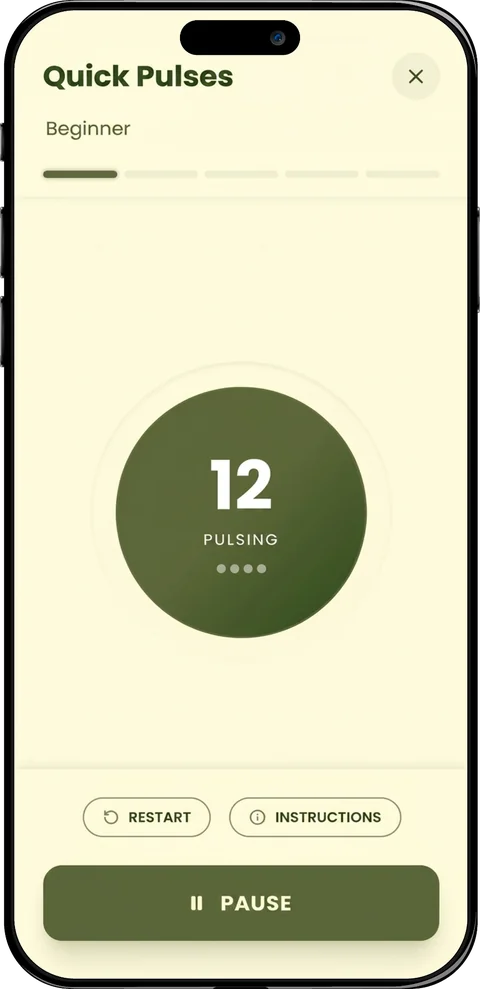
Ejaculatory control runs through the pelvic floor muscles, and they respond to training. Ritmo, a guided training app for iPhone and Android, shows on screen when to contract, hold and release, vibrates at every phase change and builds a 5 to 10 minute daily plan from a quick questionnaire. It is on the App Store and Google Play.
The two types of premature ejaculation
The question "can it be cured?" has different answers depending on when the problem started. Urologists split premature ejaculation into two types, and it is worth knowing which one fits you.
Lifelong: since the first time
This is the type that has been there since the first sexual experiences and happens with almost any partner, in almost any situation. What weighs most here is how each man's body works: sensitivity, a faster ejaculatory reflex and little awareness of the muscles involved in ejaculation. It is how your body came, and treatment teaches it to respond differently.
Acquired: it started later
This is the type that shows up after a period when your timing was normal. It usually has a trigger: anxiety, a stressful phase, a new relationship, prostate inflammation, a thyroid problem or erection trouble. That last one is common and easy to miss: a man who is afraid of losing his erection tends to rush to finish before it goes. Once the cause is treated, acquired premature ejaculation often goes away.
What "cure" means here
With the acquired type, cure can be literal: the cause is resolved and timing goes back to normal. With the lifelong type, think of learned control. The reflex is still there, but you start to notice when it is coming and gain a way to hold it. For the man living with it, the practical result is the same: sex stops ending before you want it to.
Why ejaculation comes too early
Ejaculation is a reflex with two phases. In the first, semen is moved into the urethra. In the second, the pelvic floor muscles, mainly the bulbocavernosus, contract in waves and push the semen out. Once the first phase starts, there is no going back. Control lives before that, while arousal is building.
A few things shorten that window. Anxiety puts the nervous system on alert and speeds up the reflex. A pelvic floor that is too tense stays contracted all the time and reaches its limit faster. And poor body awareness keeps a man from noticing arousal climbing until he is past the point. All of this responds to training.
Which treatments exist
Pelvic floor training
It is the foundation of treatment without medication. The training has two parts. The first is learning to contract: with strength, you gain a brake you can use when arousal rises. The second, just as important, is learning to let go. Many men with premature ejaculation live with the pelvic floor tight without noticing, and relaxing on purpose is what gives you room to hold on. That part is explained in reverse Kegels and relaxation.
Behavioral techniques
The best known are stop and start (pausing stimulation when arousal gets close to the limit and resuming once it drops) and the squeeze technique (pressing the base of the glans at that same moment). Both teach you to recognize the point of no return. They work better when a man already has awareness of his pelvic muscles, because then he can also use his own body as a brake.
Breathing and anxiety
Short breaths and holding your breath speed up arousal. Breathing slowly, into the belly, calms the nervous system and relaxes the pelvic floor. If the anxiety is big, working on it with a psychologist helps, because the fear of finishing early is exactly what makes you finish early. See also how not to lose your erection from nerves, which covers the same cycle.
Medication and numbing products
A urologist may prescribe medication that lengthens the time to ejaculation or local anesthetics that reduce sensitivity. They help, but they work only while you use them and do not teach control. Many doctors pair the medication with training, so the man gets an immediate result while building control that stays. Never use medication without medical guidance.
When to see a urologist
See a urologist if premature ejaculation bothers you or your partner, especially if it started after a period of normal timing. The visit looks for treatable causes: prostate inflammation, thyroid problems, erection trouble. Go sooner if there is pain when you ejaculate, blood in the semen, burning when you urinate or erection loss at the same time.
Premature ejaculation is one of the most common complaints in a urology office, and the doctor will treat it like any other topic.
What you can do starting today
- Learn to find the right muscle: it is the one you would use to stop the flow of urine, without squeezing your glutes or abs.
- Practice contracting and releasing every day, with the same care for both parts.
- Breathe slowly during sex and do not hold your breath when arousal rises.
- Watch how your arousal builds. Knowing where you are is half of control.
- Take the pressure off the moment. Pressure speeds up the reflex.
Training gives you something the other steps do not give on their own: you feel the change. The contraction gets stronger, relaxing gets easier, and you notice the muscle respond when you call on it. For the full step by step without medication, read premature ejaculation: causes and natural treatment.
How Ritmo puts this into practice
Ritmo is a guided male pelvic floor training app for iPhone and Android. You answer a questionnaire about your goal and your starting point, and the app builds the plan. Each session lasts 5 to 10 minutes and includes 4 to 7 exercises, with a rest screen between them. During the exercise, the screen shows the timer and the phase, contract, hold, release or rest, and your phone vibrates at every change. You do not need to count anything or guess when to stop.
The program alternates two sessions with equal weight. Session B trains control and coordination, the part most connected to premature ejaculation: contracting at the right moment, releasing fully, changing the rhythm. Session A trains strength and endurance, which give you the brake. Progression is automatic, the weekly Strength Test shows your progress and short lessons explain the why behind each step. The icon is discreet, and you can do the session wherever you want, with no equipment.
Frequently asked questions
Can premature ejaculation be cured permanently?
It depends on the type. When it started after a period of normal timing, it usually has a treatable cause, such as anxiety, stress or prostate inflammation, and it can go away for good once the cause is resolved. When it has always been there, the reflex remains, but a man learns to control it with pelvic floor training and behavioral techniques.
What is the difference between lifelong and acquired premature ejaculation?
Lifelong premature ejaculation has been there since the first sexual experiences and happens in almost any situation. Acquired premature ejaculation shows up after a time when timing was normal and usually has a trigger, such as anxiety, a new relationship, a prostate problem or erection trouble.
What causes premature ejaculation?
The most common causes are anxiety, a pelvic floor that is too tense, little awareness of the muscles involved in ejaculation, high sensitivity and, in the acquired form, issues like prostate inflammation, thyroid problems and erection trouble. It is almost always a mix of factors.
Do Kegel exercises help with premature ejaculation?
They help, as long as the training includes both contracting and releasing. A strong contraction gives you a brake to use when arousal rises, and conscious relaxation takes the pelvic floor out of the tension that speeds up the reflex. The result is more control and more awareness of the point of no return.
When should I see a urologist for premature ejaculation?
When it bothers you or your partner, especially if it started after a period of normal timing. Go sooner if there is pain when you ejaculate, blood in the semen, burning when you urinate or erection trouble at the same time. The urologist looks for treatable causes and may prescribe medication alongside training.
Is there an app for treating premature ejaculation with exercises?
Yes. Ritmo is a guided male pelvic floor training app for iPhone and Android. It builds the plan from a questionnaire, guides each 5 to 10 minute session by showing when to contract, hold and release, vibrates at every phase change and tracks your progress. It is on the App Store and Google Play. It does not replace medical care.
Conclusion
Premature ejaculation can be treated, and in most cases it really improves. If it started later, look for the cause with a urologist, because it often goes away once the cause is treated. If it has always been there, the path is learning control, and control can be trained like any other skill of the body.
Start with the muscle that makes ejaculation happen. Ritmo guides each 5 to 10 minute session a day, shows when to contract and release and tracks your progress, so you can build the control you are missing.