Educational content. This article does not replace consultation with a doctor or pelvic physiotherapist. For persistent symptoms or pre-existing conditions, seek professional guidance before starting any exercise routine.
When people talk about erectile dysfunction (ED), the first thing that comes to mind is usually medications like Viagra or Cialis. Few people know there is a natural approach, with no side effects and impressive results proven in clinical trials: training the pelvic floor muscles.
In this article, we gathered the main studies that show how this training can restore erectile function, and how Ritmo translates these clinical protocols into practical 5 to 10 minute sessions.
How to get firmer naturally: the direct answer from science
75.5% improved firmness in 12 weeks
How to get a firmer erection is one of the most searched questions among men. Dorey's study (2005, BJU International) followed 55 men with erectile dysfunction through 3 months of pelvic floor exercises: 75.5% improved penile firmness and 40% recovered normal erectile function without medication. The mechanism is vascular: contracting the ischiocavernosus and bulbocavernosus raises intracavernosal pressure and prevents venous leak during the erection.
How an erection works (and where the pelvic floor fits in)
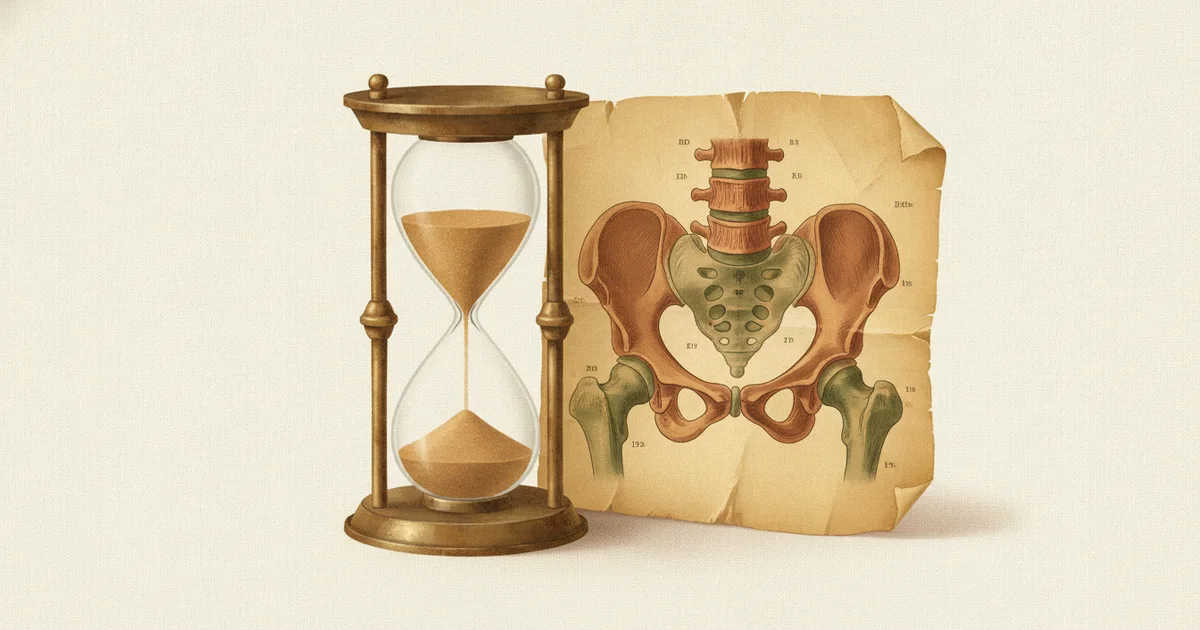
An erection is a vascular event: the brain sends signals that relax the arteries of the penis, letting blood fill the corpora cavernosa. But keeping that erection rigid depends on a mechanical mechanism: venous compression. To understand which muscles do this work, read what the male pelvic floor is .
The ischiocavernosus and bulbocavernosus muscles, both part of the pelvic floor, contract around the base of the penis, compressing the drainage veins. This keeps blood from escaping and maintains high intracavernosal pressure.
When these muscles are weak, blood comes in normally but escapes too quickly, resulting in erections that start but don't hold, or that lose firmness during the act.
The study that changed the perspective
40% complete cure
In a randomized controlled trial of 55 men with erectile dysfunction, 40% recovered normal erectile function after 3 months of pelvic floor exercises, with no medication at all.
Dorey G, Speakman M, Feneley R, Swinkels A, Dunn C. Pelvic floor exercises for erectile dysfunction. BJU International. 2005; 96(4):595-597. DOI: 10.1111/j.1464-410X.2005.05690.x
The study by Dorey et al. (2005), published in BJU International, is considered a landmark in the field:
- 75.5% showed some degree of improvement in erectile function.
- 40% recovered normal erectile function.
- 35.5% improved significantly, though not completely.
- 24.5% showed no improvement, generally cases with severe vascular causes or advanced diabetes.
Other studies that confirm the effectiveness
Belgian pioneering work
One of the earliest studies in the field showed that perineal rehabilitation significantly improved erectile function in men complaining of venous leak, suggesting that the muscular mechanism is crucial for firmness.
Claes H, Baert L. Pelvic floor exercise versus surgery in the treatment of impotence. British Journal of Urology. 1993; 71(1):52-57.
Exercise + lifestyle
Combining pelvic floor exercises with lifestyle changes (cutting back on alcohol, quitting smoking, losing weight) produced improvement in more than 80% of mild to moderate cases.
Dorey G, Speakman M, Feneley R, Swinkels A, Dunn C, Ewings P. Randomised controlled trial of pelvic floor muscle exercises and manometric biofeedback for erectile dysfunction. British Journal of General Practice. 2004; 54(508):819-825.
Post-surgical recovery
Men who performed pelvic floor exercises early after radical prostatectomy had significantly faster recovery of erectile function, with clear differences as early as 3 months post-op.
Prota C, Gomes CM, Ziccardi A, et al. Early postoperative pelvic-floor biofeedback improves erectile function in men undergoing radical prostatectomy. International Journal of Impotence Research. 2012; 24(2):71-76. DOI: 10.1038/ijir.2011.47
Who the exercises work best for
- Mild to moderate ED: able to start the erection but not keep it firm. This is the profile that benefits most, since the problem is usually in the muscular mechanism.
- Venous leak: blood enters the corpora cavernosa but escapes quickly. The pelvic muscles compensate for exactly this.
- Post-prostatectomy: early rehabilitation is recommended in several urological guidelines.
- Age-related ED: the natural weakening of the muscle is reversible with proper training.
Kegel vs Viagra vs Cialis: an honest comparison
Pelvic floor exercises and PDE5 inhibitors (Viagra, Cialis) act on different mechanisms and are not mutually exclusive. The table compares the three options on the criteria that matter most:
| Criterion | Pelvic exercises | Sildenafil (Viagra) | Tadalafil (Cialis) |
|---|---|---|---|
| Mechanism | Muscular venous compression | Arterial vasodilation | Arterial vasodilation |
| Effectiveness in mild to moderate ED | 75.5% (Dorey 2005) | 70% to 80% | 70% to 80% |
| Onset of effect | 4 to 12 weeks | 30 to 60 minutes | 30 minutes |
| Duration of effect | Permanent with maintenance | 4 to 6 hours | 24 to 36 hours |
| Side effects | None in trials | Headache, flushing, dyspepsia | Myalgia, headache, back pain |
| Prescription required | Not required | Yes | Yes |
Dorey's study (2004) showed that men who did the exercises managed to reduce or eliminate their use of medication over time. Many combine both approaches: the medication makes filling easier, and the trained muscles maintain firmness.
How Ritmo applies Dorey's protocol
The protocol in Dorey et al.'s study followed three progressive phases, and Ritmo replicates this same logic:
- Phase 1, Activation: sustained contractions focused on correct technique. The app guides each contraction to make sure you're working the right muscles, without recruiting glutes or abs.
- Phase 2, Strengthening: a progressive increase in hold time and the introduction of fast contractions. Ritmo adjusts automatically as you progress.
- Phase 3, Integration: combined exercises in different positions, with greater complexity and volume. Preparation for keeping muscular control in real situations.
Gradual progression is essential. Starting with contractions that are too long fatigues the muscle before you finish the set. Ritmo calibrates this for you automatically.
Expected results with training
- Weeks 1 to 3: greater awareness of the pelvic musculature. Still no noticeable functional changes, and that's normal.
- Weeks 4 to 6: first signs, more frequent or firmer morning erections. Better control of post-void dribbling.
- Weeks 8 to 12: significant improvement in erectile firmness during sexual activity. Most studies record the most striking results in this period. For details, see how long it takes to see results with pelvic exercises .
Frequently asked questions
How do you get a firmer erection naturally?
Dorey's study (2005, BJU International) showed that 75.5% of men with erectile dysfunction improved penile firmness after 3 months of pelvic floor exercises, and 40% recovered normal erectile function without medication. The mechanism is vascular: contracting the ischiocavernosus and bulbocavernosus muscles raises intracavernosal pressure and prevents venous leak during the erection.
Do exercises for erectile dysfunction actually work?
Yes. Three out of four men with mild to moderate ED improve their erectile function after 3 months of pelvic floor training, according to the randomized controlled trial by Dorey et al. (2005, BJU International). 40% recover normal function and 35.5% see a significant partial improvement. The profile that responds best is venous leak (blood comes in but doesn't stay trapped).
Do exercises for erectile dysfunction replace Viagra?
In cases of mild to moderate ED with a muscular component, yes, partially or fully. In severe cases with serious vascular causes, advanced diabetes or nerve damage, the exercises complement the medication but rarely replace it. The mechanisms are different: Viagra/Cialis increase blood inflow; pelvic exercises improve blood retention.
How long does it take to see results from exercises for impotence?
The first signs (more frequent morning erections, better control) appear between 3 and 6 weeks. Significant clinical results were recorded at 3 months in Dorey's study (2005). Most protocols use 12 weeks as the standard duration.
Which pelvic floor muscles control the erection?
The ischiocavernosus and bulbocavernosus muscles, both part of the pelvic floor, contract around the base of the penis during an erection. They compress the drainage veins, keeping blood from escaping and maintaining high intracavernosal pressure. When they're weak, blood comes in but doesn't stay trapped, resulting in erections that lose firmness mid-act.
When to see a doctor
Erectile dysfunction that appears suddenly, especially in young men, can be a sign of an underlying vascular, neurological or hormonal cause that requires a urological evaluation. Pelvic training complements the clinical workup, but it doesn't replace tests when there's suspicion of cardiovascular disease, uncontrolled diabetes or hypogonadism.
Conclusion
Erectile dysfunction isn't just a "circulation" problem that a pill solves. In many cases, the muscular component is just as important, and trainable. The studies show that 3 out of 4 men improve their erection with pelvic floor exercises, and 4 out of 10 recover full function.
Ritmo puts these clinical protocols in your pocket: 5 to 10 minutes a day, no equipment, no side effects, with automatic progression based on the same studies cited here. For anyone looking for a natural, evidence-based approach, it's the first line of action.