Educational content. This article does not replace consultation with a doctor or pelvic physiotherapist. For persistent symptoms or pre-existing conditions, seek professional guidance before starting any exercise routine.
You read that Kegels help you last longer and get a firmer erection, you decide to start, you squeeze something down there and the doubt sets in: was that the right muscle? Your glutes went hard, your belly pulled in, your breathing stopped. Weeks later nothing has changed, and the wrong conclusion shows up on its own: "Kegels don't work for me". Most of the time what failed was the contraction, not the method.
This article shows how to check, without any device, whether you are contracting your pelvic floor or a neighboring muscle, the most common signs of error, what science found about the cue that produces the right contraction, and how Ritmo uses that to guide every repetition.
How to know if you are squeezing the right muscle: the direct answer
Direct answer
A correct male Kegel contraction pulls the penis inward and lifts the testicles slightly, while glutes, thighs and abdomen stay relaxed and breathing continues normally. If your hips move, your belly hardens or you hold your breath, the effort went to the wrong muscle. In an electromyography study, the cue "shorten the penis" produced the greatest urethral sphincter activity without recruiting the abdomen.
Why so many men squeeze the wrong muscle
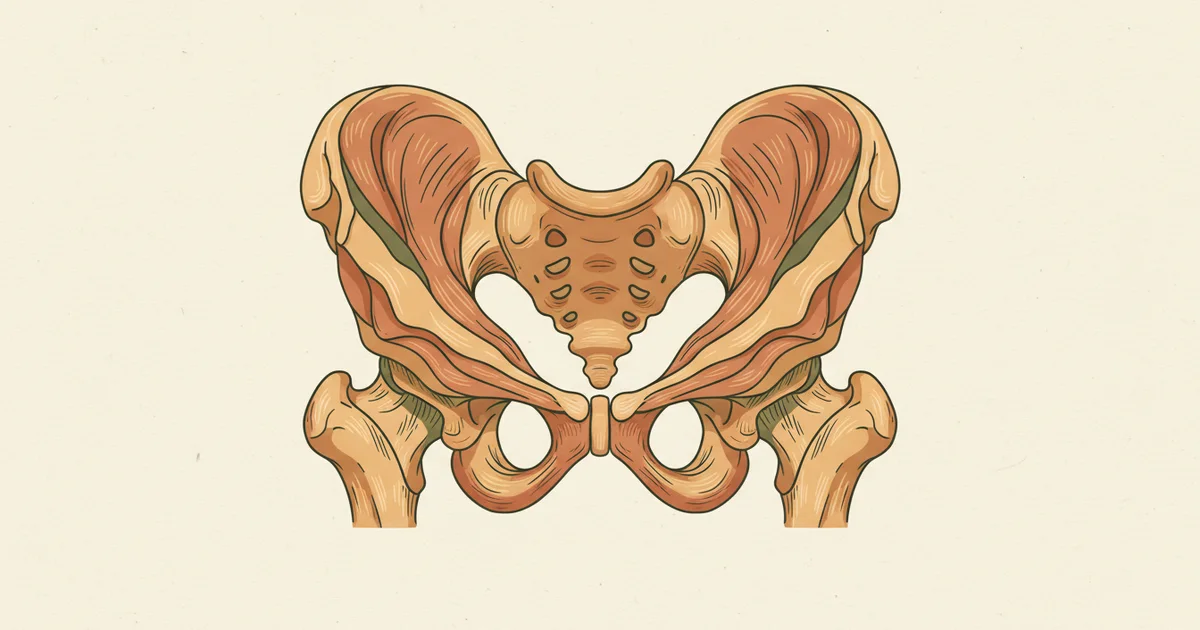
The pelvic floor is a small group of muscles tucked between the pubic bone and the tailbone that almost nobody learned to feel. When the brain gets the order "squeeze down there", it falls back on the big muscles it knows well: glutes, inner thighs and abs. All of them sit nearby, all of them are easy to command, and none of them does what you need.
There is also a language problem. "Hold your urine", "tighten your anus", "lift your bladder" and "shorten your penis" sound like synonyms, but each phrase recruits a different part of the region. That is exactly what a group of researchers from Australia and the United States set out to measure.
4 cues, 4 different patterns
In 15 healthy men, researchers compared four verbal instructions using transperineal ultrasound, intra-abdominal pressure and electromyography. "Shorten the penis" produced the greatest urethral displacement and the greatest activity of the striated urethral sphincter. "Elevate the bladder" produced the largest increase in abdominal activity and intra-abdominal pressure, the opposite of what you want. "Tighten around the anus" mainly activated the anal sphincter.
Stafford RE, Ashton-Miller JA, Constantinou C, Coughlin G, Lutton NJ, Hodges PW. Pattern of activation of pelvic floor muscles in men differs with verbal instructions. Neurourology and Urodynamics. 2016; 35(4):457-463. DOI: 10.1002/nau.22745
The authors' conclusion is easy to apply: the best cue is the one that activates the muscles capable of raising urethral pressure without raising abdominal activity. In practice, that means thinking about pulling the penis inward, not clenching your buttocks or sucking in your stomach.
The 30-second test to check your contraction
You do not need ultrasound or electrodes. You need a mirror, a comfortable position and attention. Do it in this order:
- Lie on your back with your knees bent. Lying down, the glutes and thighs have less reason to join in and it is easier to isolate the pelvic floor.
- Put one hand on your belly and the other on your glute. Your hands are your sensors. If either one feels something tighten, the effort leaked into the wrong muscle.
- Think "pull the penis inward" or "shorten the penis". Squeeze gently, about 30% of what you can, for 3 seconds.
- Watch for the right signs. The base of the penis draws in a little, the testicles rise slightly and the area between the scrotum and the anus (the perineum) seems to lift. If you look in the mirror you see the movement; if you place a finger on the perineum you feel the tissue pull upward.
- Release completely and breathe. Relaxation is part of the exercise. If you cannot let go, you were probably squeezing too hard or with the wrong muscles.
If both hands stayed quiet, your breathing stayed normal and you saw or felt the perineum lift, the contraction was right. That is the pattern you will repeat in your sessions.
The urine stream test
Stopping your urine midstream is the best-known way to find the muscle, and the Stafford study confirms that "stop the flow of urine" activates the pelvic floor. Use it once or twice only to recognize the sensation. As a training routine it is a bad idea: holding urine repeatedly interferes with bladder emptying and trains the muscle at the wrong moment.
The 5 signs you are squeezing the wrong muscle
- Locked glutes. If you feel your buttocks clenching or your hips lifting off the mattress, the gluteus maximus took over the job. It is huge, the pelvic floor is small, and the brain picks the shortcut.
- Belly hardening or pulling in. Contracting the abdomen raises the pressure inside the belly and pushes the pelvic floor downward, the opposite of what a Kegel aims for. It is the pattern the cue "elevate the bladder" produced in the study.
- Thighs pressing together. The adductors kick in when someone tries to "close" the region. Keep your knees hip-width apart and the problem usually disappears.
- Held breath. Holding your breath is almost always a sign that the abdomen and diaphragm were recruited. Count out loud during the contraction; if your voice breaks, you are holding it.
- Pushing instead of pulling. Some men bear down as if having a bowel movement. That is the reverse of the contraction: the perineum drops instead of lifting. The right movement is always inward and upward.
Why technique changes the outcome
The studies that showed gains in erection and ejaculatory control used supervised contractions. In Dorey's clinical trial, participants learned to contract with a physiotherapist and biofeedback before training on their own. The gain depends on hitting the right muscle, and the number below applies to men who did.
75.5%
of the 55 men with erectile dysfunction who received pelvic floor exercises with technical guidance regained normal erectile function (40%) or improved (35.5%) after 3 months. Before starting the training, each participant learned to contract correctly with a physiotherapist.
Dorey G, Speakman M, Feneley R, Swinkels A, Dunn C. Pelvic floor exercises for erectile dysfunction. BJU International. 2005; 96(4):595-597. DOI: 10.1111/j.1464-410X.2005.05690.x
The logic is the same as any strength training: the muscle that does the work is the one that adapts. If the glutes do the reps, the glutes get stronger, and the bulbocavernosus and ischiocavernosus, which sustain penile rigidity, stay the same. To understand what each of those muscles does, read what the male pelvic floor is.
Efficacy of pelvic floor muscle training may depend on the instructions used to train activation. Stafford RE et al. Pattern of activation of pelvic floor muscles in men differs with verbal instructions. Neurourology and Urodynamics. 2016.
How to train precision in the first weeks
Finding the muscle once is not enough. The brain needs to repeat the path until the contraction comes out without thinking. Three adjustments help:
- Start lying down, then sitting, then standing. Each position raises the temptation to use glutes and thighs. Only move up a level when the previous one is clean.
- Squeeze gently and correctly before squeezing hard. Maximum effort invites the big muscles to the party. Contractions at 30% or 50% of capacity teach isolation; intensity comes later.
- Release completely between reps. A muscle that does not relax cannot contract well again. The rest between reps is part of the training, not a pause.
Once you own the contraction, the rest of the program makes sense: sustained contractions, quick contractions and progressive loading, as explained in the complete guide to male Kegel exercises.
How Ritmo applies this in practice
Ritmo was built on what the Stafford study shows: the cue matters. The first lesson of the program, before any session, teaches you to find the muscle with two fingers resting on the perineum, the image of pulling inward and upward, and a three-question check: did your buttocks clench, did your belly harden, did your breathing stop? If yes, the contraction went to the wrong place and the guidance is to squeeze more gently.
During the exercise, the screen shows a timer with the name of the phase (squeeze, hold, release, rest) and your phone vibrates in sync. Continuous vibration marks the contraction time and pulses mark the release, so you do not need to look at the screen or count: you can close your eyes and pay attention only to the perineum.
Sessions last 5 to 10 minutes and the app alternates two types of training. Session A works strength and endurance with longer contractions; Session B works control and coordination with short contractions and intensity staircases, which demand exactly the skill of dosing the right muscle without recruiting its neighbors. Progression is automatic, with scheduled rest days, and the app icon is discreet. If you want to know what to expect along the way, the time ranges from the studies are in how long it takes to see results from pelvic exercises.
When to see a pelvic floor physiotherapist
Most men get the contraction right within a few days using the tips above. It is worth seeing a professional if, after 2 to 3 weeks of trying, you still cannot feel the perineum lift; if there is pain when contracting or sitting; or if you have had prostate surgery. In those cases, one or two biofeedback sessions solve the identification, and guided training in the app continues afterward.
Frequently asked questions
How do I know if I am squeezing the right muscle during Kegels?
Lie down with your knees bent, one hand on your belly and one on your glute, and think about pulling your penis inward. A correct contraction draws the base of the penis in, lifts the testicles slightly and raises the perineum, while neither hand feels anything tighten and your breathing stays normal. If your belly or glutes tightened, the effort went to the wrong muscle.
Why do I squeeze my glutes instead of my pelvic floor?
The glutes are large, easy to command and sit right next to the pelvic floor, so the brain takes that shortcut when the instruction is vague. It usually happens when the contraction is too strong or done standing. Squeeze more gently, start lying down and think about shortening the penis, not clenching your buttocks.
What is the best cue to activate the pelvic floor in men?
In the study by Stafford and colleagues (2016), using ultrasound and electromyography in 15 men, the cue "shorten the penis" produced the greatest urethral sphincter activity, while "elevate the bladder" recruited the abdominal muscles the most. The mental image of pulling the penis in and up is the most efficient one for training.
Can I use the stop-the-urine test to train Kegels?
Only to recognize the sensation once or twice. Repeatedly stopping the stream interferes with bladder emptying and trains the muscle at the wrong moment. Once you have identified the contraction, train away from the bathroom, lying down or sitting, with gentle contractions and full relaxation between them.
Does doing Kegels with the wrong muscle hurt your progress?
Yes. The muscle doing the work is the one that gets stronger. If the glutes or abs take over the repetitions, the bulbocavernosus and ischiocavernosus get no stimulus and the gains in erection and control never show up. Tightening the abdomen also pushes the pelvic floor down, the opposite of the intended movement.
Conclusion
The question "am I squeezing the right muscle?" has an observable answer: the penis draws in, the perineum lifts, and glutes, thighs and belly stay relaxed with normal breathing. Science also offers a hint about the cue that best produces that pattern: think about shortening the penis, not tightening the anus or lifting the bladder.
Getting this right at the start is what separates men who see results from men who quit. Ritmo guides every contraction with the right cue, keeps time with vibration so you can focus on the muscle, and progresses on its own from there, 5 to 10 minutes a day, wherever you want.